Math Sharpeners

Plant Science Charts for School Students

Plant Science Charts make learning about plants simple, visual, and fun for students, teachers, and classrooms. These charts cover all essential topics, including parts of a plant, types of plants, life cycle, photosynthesis, reproduction, types of roots, and the functions and uses of plant parts.

With clear diagrams and labeled illustrations, students can easily understand complex concepts, prepare for exams, and complete school projects. Teachers can use these charts in classrooms and labs to provide interactive, visual learning, while parents can support their children’s studies at home.

Available in printable PDFs and digital formats, these charts are perfect for visual learners and anyone interested in plant biology. They help students revise quickly, learn efficiently, and retain information longer through engaging visuals.

Enhance your learning experience and make plant science engaging with these colorful, easy-to-understand charts. Whether for classroom teaching, home study, or school projects, these charts are an essential tool for mastering plant biology.

Plant Science Charts for Easy Learning

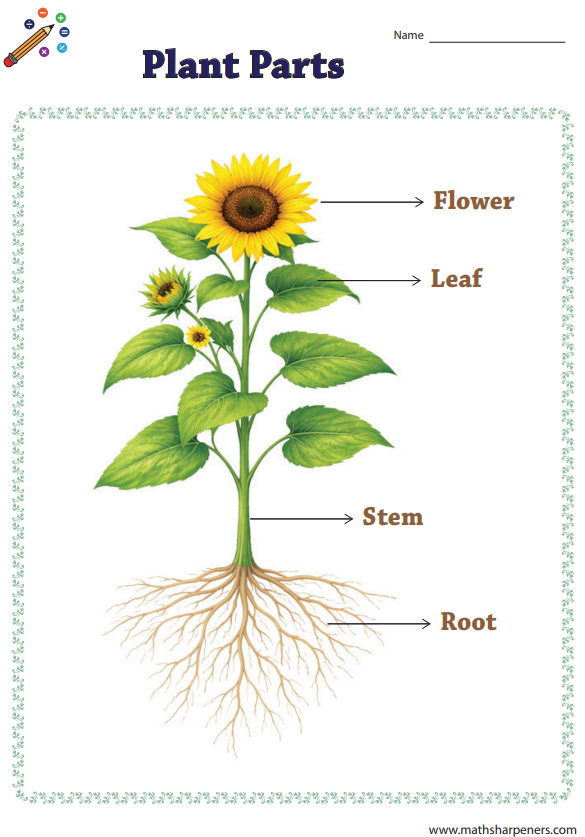
Parts of the Plant

The parts of a plant include roots, stem, leaves, flowers, fruits, and seeds, each performing essential functions for growth and survival.
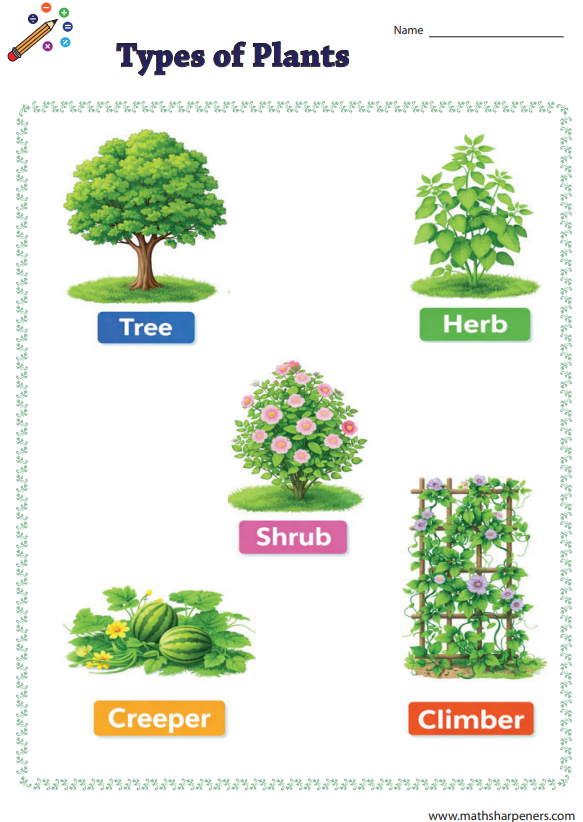
Types of Plants

Plants are classified into various types such as trees, shrubs, herbs, climbers, and creepers, based on their structure.

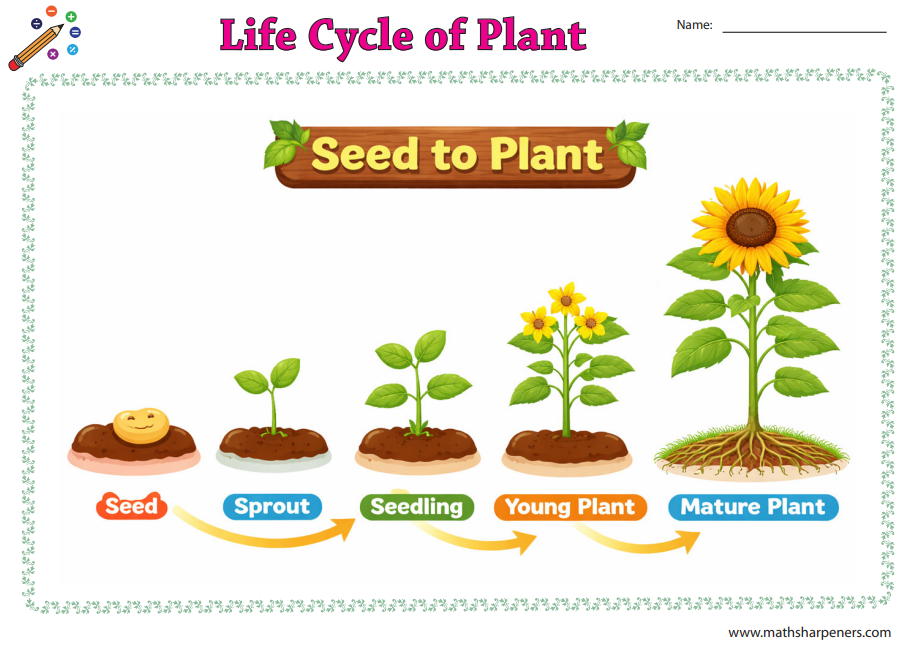
Life Cycle of Plant

The life cycle of a plant includes seed germination, matures, flowers, produces seeds, and the cycle repeats.

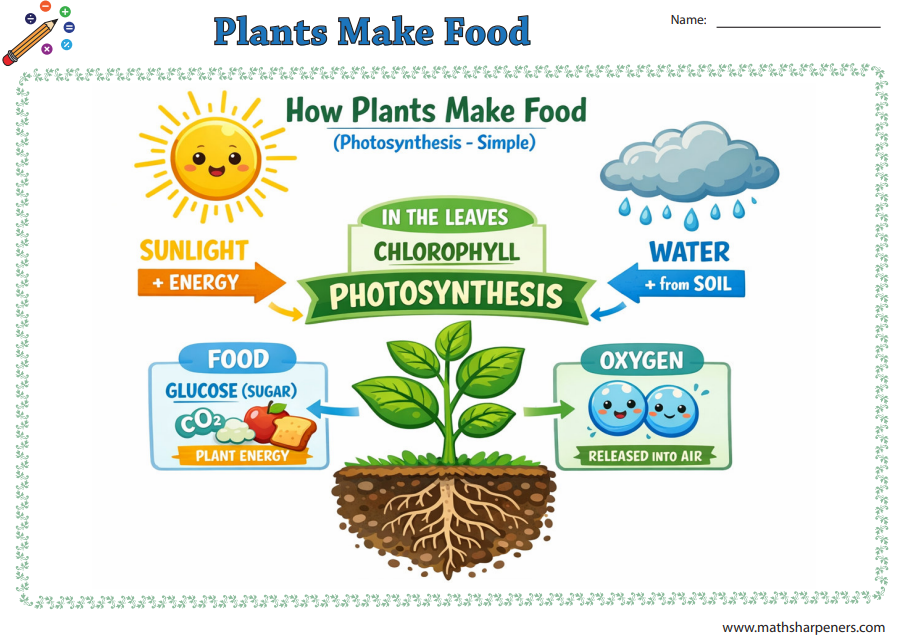
Plants Make Food

Plants make food through photosynthesis, using sunlight, water, and carbon dioxide to produce energy.

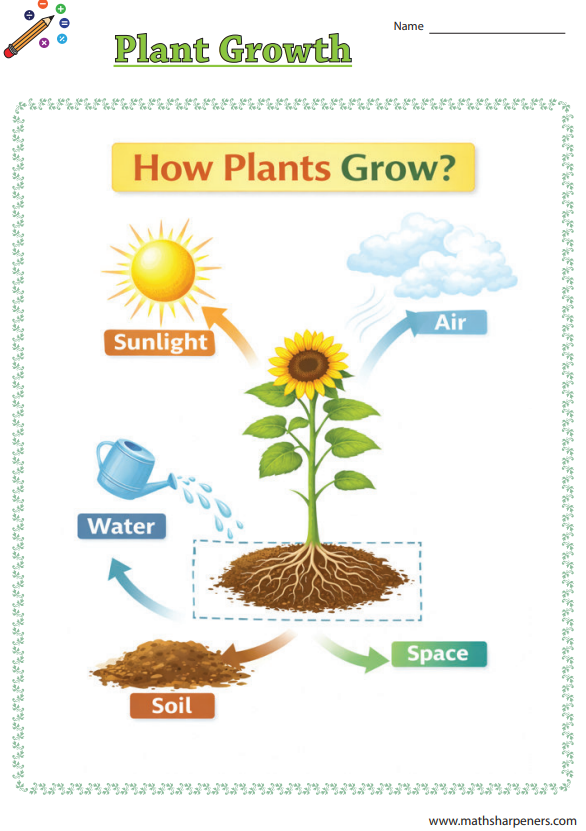
How Plants Grow?

Plants grow by absorbing water and nutrients from the soil, using sunlight, and developing roots, stems, leaves, and flowers.

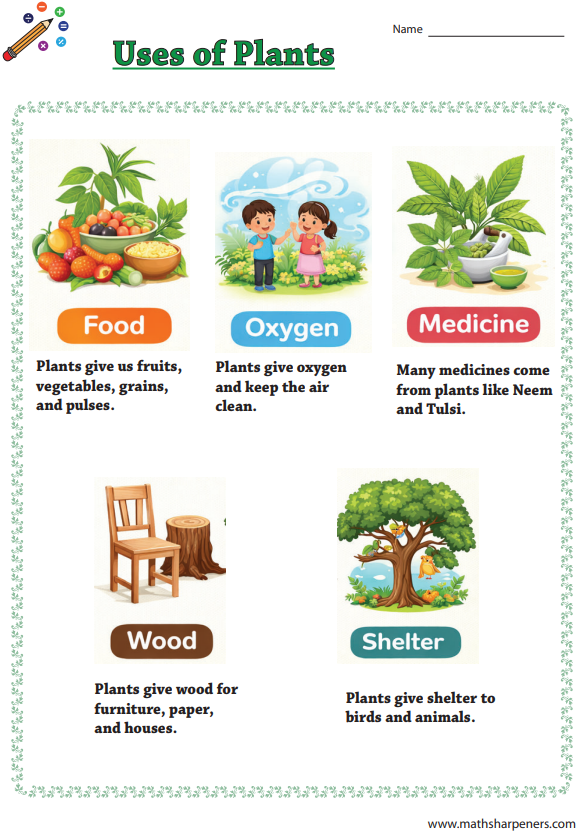
Uses Of Plants

Plants provide food, oxygen, medicine, clothing, shelter, and raw materials for daily life.

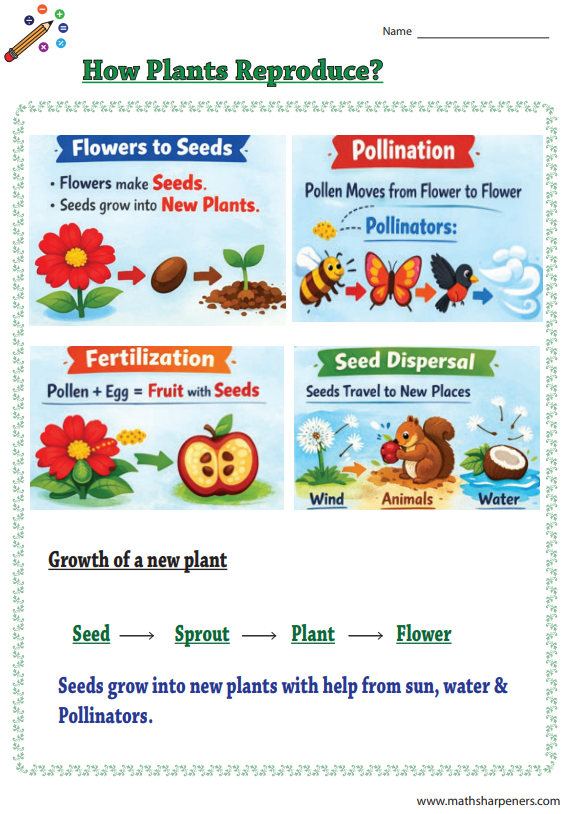
How Plants Reproduce?

Plants reproduce through seeds, spores, or vegetative methods like cutting, budding, or runners.

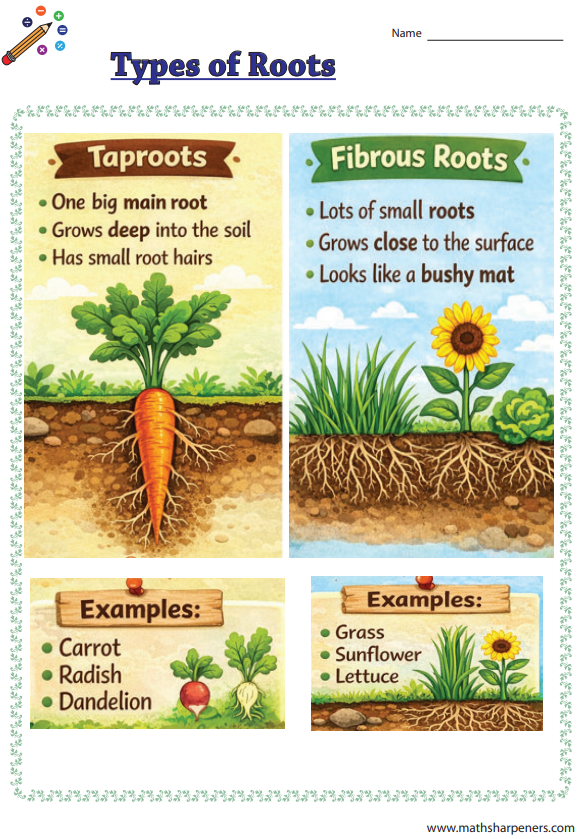
Types of Roots

Roots are of two main types: taproot (one main root) and fibrous root (many thin roots).

Functions of Plant Parts

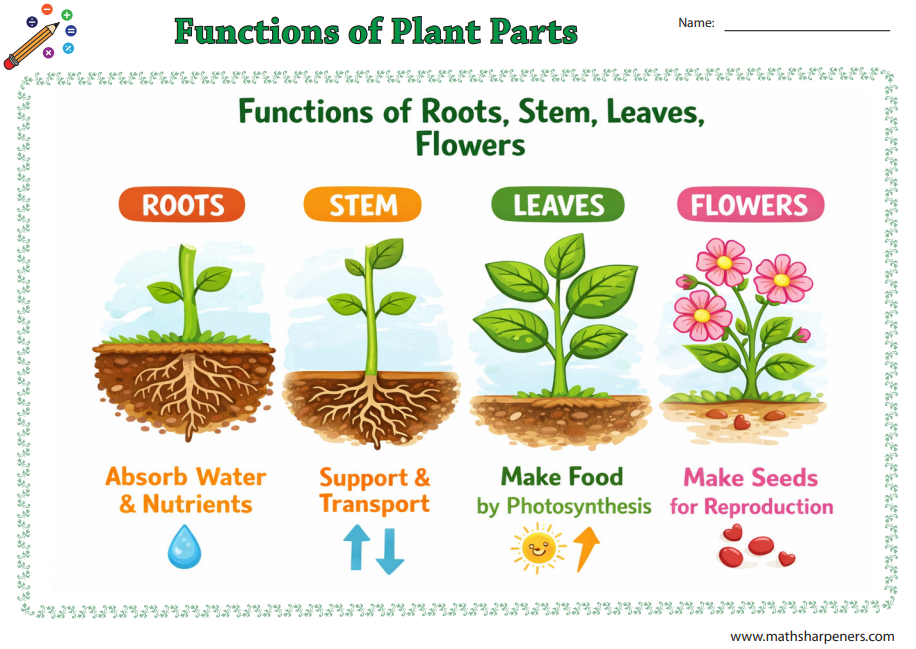
Roots absorb, stems support, leaves make food, flowers reproduce, fruits protect seeds.

What are the basic parts of the body for kids?

The basic parts of the body for kids include the head, eyes, ears, nose, mouth, hands, legs, and feet.

Why is it important for kids to learn body parts?

Learning body parts helps kids build vocabulary, understand their body, and improve daily communication skills.

How can children learn body parts easily?

Kids learn body parts easily through pictures, charts, songs, flashcards, and fun worksheets.

At what age should kids learn body parts?

Children can start learning body parts as early as 2–3 years old through simple naming and pointing activities.

Are worksheets helpful for learning body parts?

Yes, worksheets help kids practice identifying, matching, and naming different body parts in an engaging way.